Did the Purchase of Tewkesbury Abbey Reflect the Continuation of Traditional Catholic Belief?
“The general acquiescence of the English people is surely one of the most mysterious things in our history”[1]
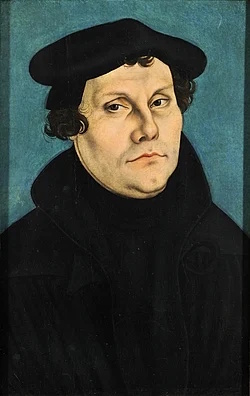
On 31 October 1517 a little known German provincial priest nailed his Disputation of Martin Luther on the Power and Efficacy of Indulgences to the door of the Church of Wittenberg in Saxony, igniting a series of religious reforms and conflicts that still resonate today. Luther’s Ninety Five Theses, as they became known, have come to be seen as the moment the Middle Ages ended and the early modern period began. The Reformation is counted as one of history’s crucial turning points: it impacted the lives of every European throughout the early modern period, whilst its effects are still being felt today.
When Henry inherited the throne in 1509 England was a staunchly loyal Catholic state, resisting Lutheran ideas as they began to spread throughout Europe in the 1520s. Within thirty years of Henry’s ascension, however, England had split with Rome and Henry had established himself as the ‘Supreme Head of the Church of England’. By the time Elizabeth took the throne in 1558 England had become the leading European Protestant state, despite the attempts of her staunchly Catholic sister Mary to stem the rising tide of reform during her short reign. England was wracked with religious upheaval throughout the the sixteenth century, none more so than during the reign of Henry, as he rejected the power of the papacy but remained opposed to full-scale Protestant reform. Despite this, a leading historian argues that from “Rome’s perspective, these people were no more Catholic than … Luther”.[2]
The rural parish town of Tewkesbury provides those interested in the impact of Lutheran ideas and the early Reformation with an almost unique opportunity, as it represents a microcosm of what was occurring at a national level. At the highest levels of authority two royally appointed bishops of Worcester, Hugh Latimer and John Bell, fought to impose their view on the development of the new Church of England between 1535 and 1543. Latimer, bishop of Worcester from 1535 to 1539, represented the rising tide of Protestant religious feeling, coming to prominence during Henry’s break with Rome and the ‘Dissolution of the Monasteries’. Bell was Latimer’s successor from 1539 to 1543 but, in contrast, undertook what Ryrie has labelled ‘England’s last medieval heresy hunt’, as he attempted to roll back the Protestant gains Latimer had made. Within the context of this religious struggle, the people of Tewkesbury sought to save their parish church, Tewkesbury Abbey, from Dissolution while, at the same time, powerful Protestant families were part of the ruling elite of the parish. Understanding the motives of the parishioners in purchasing the Abbey allows us a window into the minds of ordinary people, far from the centres of power, as they struggled to adjust to one of the most momentous events in English history.
The Parish of Tewkesbury lies on the northern border of Gloucestershire – but at the time of the Dissolution it lay within the Bishopric of Worcester – ideally placed to make the most of river trade from the Midlands due to its location astride the rivers Severn and Avon. Tewkesbury maintained trading links with Gloucester, thirteen miles to the south of the town, and Bristol at the mouth of the Severn estuary. Importantly these trade links, especially with the international port of Bristol, would become significant following Luther’s publication of the Ninety Five Theses, and the subsequent spread of evangelical ideas throughout Europe.[3] Despite being a rural community far from the centres of power, Tewkesbury, therefore, remained well connected with the events of the wider world.
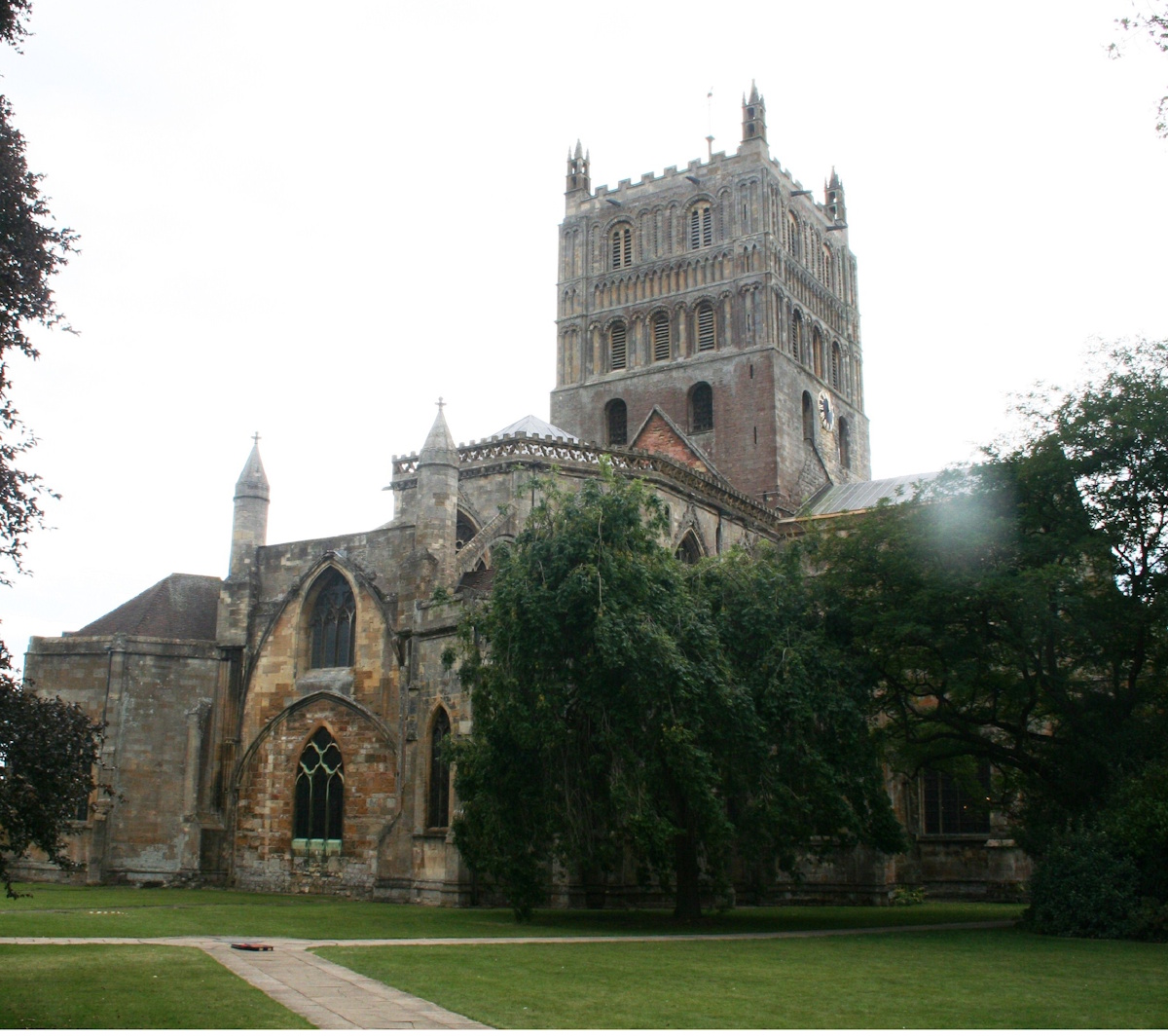
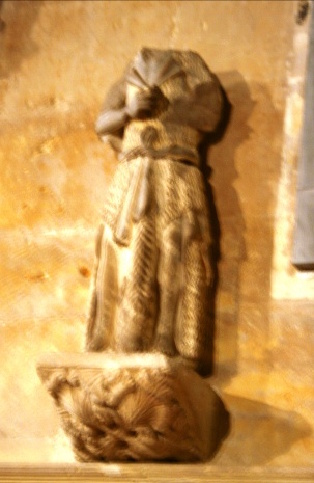
where the former Lady Chapel was demolished.
Today its outline has been marked in the grass.Click Image
to Expand
The importance of religion to the people of Medieval England cannot be over-emphasised, and this is highly evident in the splendour of Tewkesbury Abbey. The Abbey, consecrated in 1121, towered over the town, not only physically but also politically and economically, dominating nearly every aspect of life. The Abbey was, and remains, the largest building in the town, yet prior to the ‘Dissolution’ of 1540, the Abbey was much larger, incorporating a Benedictine monastery and its supporting buildings.[4] The parish was the basic administrative unit within the early modern period with roughly 9000 parishes making up the kingdom during Henry’s reign, with only 5% of people living in urban centres. The Parish of Tewkesbury comprised 12 townships within a seven mile radius of Tewkesbury, all of which would have been administered from the Abbey. Every member of English society was legally required to attend church once a week; in the case of Tewkesbury this would have meant the Abbey. Tewkesbury’s Abbey Church was different from many as it also acted as the parish church ‘since time out of mind’, throughout the later medieval and early Tudor period. The importance of this was paramount, as it was illegal for a parish not to have a parish church. As such, the people of Tewkesbury would have been able to argue for the continued existence of the Abbey in order to fulfil its continuing role as the parish church.
The ‘Abbey’ was also the centre of the wider community, organising festivals, plays, and summer games. In doing so the church not only reinforced religious conviction, but fostered a sense of community spirit, something which would be evidenced during the ‘Dissolution’. The Abbey controlled substantial rental properties throughout the parish and, despite the potential for conflict, surviving records show that relations remained amicable between the locals and the Abbey administration. This is contrary to the relationship between the laity and religious landlords elsewhere in Europe, where the exploitation of ordinary people by monastic houses was one of the main issues that led people to forgo their traditional beliefs. Tewkesbury Abbey, indeed, was one of the wealthiest in England prior to its dissolution. In 1535 the monastery comprised of 40 monks and 144 servants, with an annual income of the monastic holdings of £1,598.10s.3d. [£1,598.51p] The Abbey owned extensive holdings throughout Gloucestershire and England, with possessions ranging from Oxfordshire to South Wales. Many historians point to the disparity in wealth between the people and the monasteries as one of the main reasons behind the people accepting the introduction of Protestantism under Henry VIII. Yet the amicable relationship found between the people of Tewkesbury and one of the wealthiest religious houses in England challenges this view. In spite of the spreading of evangelical ideas during the 1520s and 1530s, traditional lay piety in Gloucestershire “was thriving”.[5] Yet Tewkesbury was still to bear witness to the extremes of religious conviction that ravaged England.
It seems likely that evangelical ideas began to make an impact on the Tewkesbury area from the early 1520s, the best evidence of which comes from the last will and testament of William Tracy. Tracy, a resident of the village of Toddington, was a former Sheriff of Gloucestershire and a man of significant local influence. Through the content of his will, Tracy has become synonymous with the growing influence of early evangelicalism in England. It was only after Tracy had died in 1530, and his will made public, that he was declared a heretic by Archbishop Warham, the Archbishop of Canterbury. As a punishment for his beliefs, his body was actually exhumed and burned in February 1532. The problem for Warham was that Tracy undeniably declared his evangelical beliefs when he affirmed in his will:
My ground and my belief is that there is but one God, and one mediator between God and Man, which is Jesus Christ. So that I do accept none in heaven nor in earth to be my mediator between me and God, but only Jesus Christ, all others be but petitioners in receiving of grace, but none able to give influence of grace.
Tracy was denying the mediation of the saints – and priests – over the deceased’s soul: a key facet of Catholic doctrine. Another was praying for the souls of the deceased whilst they were in Purgatory. Tracy, therefore, refused to bequeath any of his remaining estate to the clergy as he believed that the proceeds would be used for this.
Tracy’s testament became the model Protestant will, and was extensively printed, commented upon, and distributed by the evangelical printing pioneer William Tyndale throughout England and Europe. Tracy was a known acquaintance of Tyndale prior to the latter’s exile, whilst Tyndale’s The Testament of Master Wylliam Tracie (1535), became required reading for evangelicals throughout the continent. Ten years later, following England’s break with Rome and the ‘Dissolution’, the printing of the will was seen as sufficiently dangerous by the Tudor State as to be prohibited by the Crown.[6] Exiled evangelicals, however, continued to print and distribute Tracy’s will throughout the 1540s.The fear of evangelical ideas betrays the highly confused religious environment, within which the ordinary people of England had to live. Tracy wrote his will long before the official break with Rome in 1534 and, as the treatment of his body shows, persecution of evangelical reformers was sanctioned from the highest religious positions. Yet the importance of the will came not from its content but from its location. Tracy represented the potential for evangelicalism to reach beyond ‘the Golden Triangle’ of London, Oxford, and Cambridge, long before its official endorsement, and make a very real impact upon rural English communities. To Peter Marshall, the acceptance of evangelical ideas upon the rural middling sort represented “an ominous development from the authorities’ point of view”.[7]
During the late 1530s, the evangelical Tracy family became increasingly involved in affairs of Tewkesbury. Richard Tracy, the son of the posthumous heretic William Tracy, played a pivotal role in the “centrepiece of the Reformation”[8] within Gloucestershire, the Dissolution of the Monasteries. Despite the presence of prominent reformers in the parish, such as the Tracys, the Tewkesbury parish leadership seemed to have done little to implement reform. The parish leaders of Gloucester, in contrast, complied fully when implementing the Protestant policies of the Crown. The vacillating nature of Crown policy towards reform would have aided Tewkesbury’s parish leadership in avoiding the implementation of evangelical policies, for Henry seems to have been unsure as to what he wanted for the new Church of England. The Ten Articles of 1536, highlighted the confused environment, professing the evangelical doctrine of justification by faith, whilst re-affirming the invocation of saints, a key Catholic doctrine.[9]The religious confusion prevalent within England during the 1530s made a very real impact on the people of Tewkesbury; in 1535, the radical evangelical Hugh Latimer was appointed by Henry to the bishopric of the diocese of Worcester. Following Latimer’s tenure as bishop, however, Henry appointed the staunch traditionalist John Bell to the bishopric, in order to roll back the progress made by Latimer and the reformers.Tewkesbury Abbey was valued by commissioners prior to the dissolution at £1,598.1s.3d., making it one of the most wealthy institutions in England. Monasteries played a key role within the community itself, offering alms to the poor and organising communal events. The very nature of monastic orders, however, meant that its members were staunch supporters of traditional religion. As such, much of the resistance to evangelical policies came from monks themselves. The problem for the monastic orders, however, came from the financial woes that wracked the reign of Henry VIII. Henry had spent much of the kingdom’s wealth on increasing the extravagance of his court and pursuing military ventures in Europe. He therefore sought new ways to raise revenue. As Henry was reliant on Parliament to support his efforts to end papal jurisdiction, the monasteries looked to be his best option. The wealth of the monasteries had been coveted by the state long before the break with Rome, however, with a partial dissolution being discussed in Parliament from 1529. By 1536, Henry’s jurisdictional reform and the context of evangelicalism put the State in a position to solve the financial crisis, under the auspice of reforming abuse and corruption within the monastic orders.
In March 1536 Parliament passed an Act for the Dissolution of the Lesser Monasteries, dissolving all religious houses with an annual income under £200, confiscating their lands and wealth for the Crown. Under this act, 243 of the 800 religious houses in England were dissolved, whilst 176 were exempted through a payment to the King. The belief that the dissolution was ideological falters here, for any assault on the remnants of traditional religion would have forced complete dissolution. Pressure began to be placed on the remaining monasteries to dissolve themselves and turn over their lands to the Crown, which became legal policy in 1539 with the Dissolution of the Greater Monasteries Act. The Benedictine[10] monastery in Tewkesbury was the last to be dissolved in Gloucestershire, finally succumbing in January 1540. The monastic buildings surrounding the Abbey were torn down and their materials reused. A total of 175.5 tons of lead, 1351 ounces of silver, pearls, precious stones, and two silver mitres were all given to “the use of the Kings majesty”. The Dissolution was more significant in Tewkesbury than any other in Gloucestershire, as the parish worshipped in the nave of the Abbey, which was deemed part of the monastic properties. The use of the Abbey as the parish church would be of central importance when the people of Tewkesbury sought to purchase it from Henry. With a formal title of the Abbey of the Blessed Virgin Mary, it is not surprising that an important Abbey like Tewkesbury had constructed a Lady Chapel in dedication to Mary. Traditionally this chapel is the largest.
The destruction of the Lady Chapel was part of a wider destruction of similar Chapels by the agents of Thomas Cromwell, Henry’s chief minister. Given that Tewkesbury Abbey was classified as a large monastic holding, it is likely the destruction took place following the passing of the Act for the Dissolution of the Greater Monasteries in 1539. Joseph Bettey gives little attention to its destruction: “Immediately after the suppression of the Abbey a detailed survey was made of its buildings. The nave … was saved from destruction because it had been used by the parishioners, but the eastern lady Chapel was demolished”.[11]
Large portions of the monastic lands owned by Tewkesbury monastery were sold to Sir William Kingston, a known reformer who actively bought monastic lands. The granting of monastic land to the members of the gentry was mirrored throughout England, as Thomas Cromwell, Henry’s Chief Minister 1532-1540, believed that it might “be an inducement … to become enthusiastic supporters of the government’s policies”.[12] By 1547, over two-thirds of monastic lands had been sold to the gentry, fundamentally transforming the balance of power throughout England. The revenue raised from the Dissolution was used to fund jurisdictional reform, funding the creation of six new dioceses, including the diocese of Gloucester.[13] Unfortunately for those who were still loyal to traditional Catholicism, “when the monasteries were dissolved, the treasures of the shrines seized, or wonder-working images smashed up at Paul’s Cross, the heavens did not open, and an army of avenging angels did not pour forth”.[14] The supporters of traditional religion must have felt abandoned.
Hugh Latimer’s appointment to the bishopric of Worcester “came as something of a shock to religious conservatives in Gloucestershire and Worcestershire”, as his “ability to stir up trouble with his eloquent heresies was becoming proverbial”. Latimer immediately began to promote reform within the diocese, employing known evangelicals as public preachers. Popular reception of Latimer’s preachers was mixed and they faced an uphill battle. Evidence suggests that lay piety was thriving within the county, with reformers being restricted to a small, mainly wealthy, minority in the mould of the Tracy family of Toddington. Antony Saunders, one of Latimer’s foremost preachers, was made rector of the parish of Winchcombe, where he became the driving force behind the destruction of Hailes Abbey. Hailes, unlike Tewkesbury, did not act as the parish church for Winchcombe and, as such, the people would have lacked any justification for saving it from destruction.
Due to the size and prominence of Tewkesbury in the diocese it is most likely that Latimer must have preached in the town. Once again the evangelical Tracy family came to the fore. Richard Tracy, now a Justice of the Peace, was employed as Latimer’s “most reliable enforcer” within the diocese.[15] One of Tewkesbury’s prominent families, therefore, was closely tied to one of the most radical reforming bishops in England. Latimer’s time in the diocese was beginning to have an effect, evidenced in testaments that included strongly Protestant sentiments. John Davys, of Stroud, declared “I bequethe my soule to allmyty god … havynge no confydense in the werkys that I have done or doo, wyche ar butt fruttes of faith, but all my confydense ys to be sayvd by the blod schedyng of my savyor Jhesus Crysyte”.[16] Yet the pace of reform was too slow, with Latimer admitting that he needed more men with Tracy’s religious zeal. Latimer, however, was to become a victim of Henry’s vacillating religious policy – just as it seemed he was making an impact – when he opposed the passing of the Six Articles in 1539. This was Henry’s attempt to slow the pace of evangelical reform by reaffirming elements of pre-Reformation Catholic doctrine. Importantly for traditionalists in Tewkesbury, Latimer was forced to resign the bishopric due to his opposition to the Six Articles; in his place Henry appointed a staunch traditionalist.
Latimer’s successor, John Bell, “inherited a diocese that had been under the most radical Protestant influence of any in England for four years … he also inherited one whose history of religious dissidence went back further than that”. These were Lollard beliefs that emerged in the late fourteenth and early fifteenth centuries.[17] The choice of a staunch traditionalist for the bishopric must have been deliberate, for the diocese of Worcester represented the place “where the counter-revolutionary task was most urgent”. There was no love lost between the two bishops, Bell describing Latimer as “a horesone heretycke” , whilst Latimer referred to Bell as the “rynge leader ... [of those oppressing] the true prechers of godes worde”. Bell’s reception in the diocese was mixed, with evangelicals despairing that their reforming bishop had been replaced by a man who “never preached that I herde, excepte it were the Pope’s law”.[18] Yet Bell had been appointed to the bishopric by Henry, who knew all too well of Bell’s pioneering anti-Lutheran work during the 1520s, including the persecution of William Tyndale. It seemed that the king was attempting to stem the tide of reform, publishing the Six Articles in 1539 which reaffirmed a number of fundamental Catholic practices. The arrest of Thomas Cromwell, Henry’s principal reforming minister in 1540 removed the restraining hand on those bishops, like Bell, who wished to attack the reformers. In August 1540, the evangelical preacher Harry Costen was arrested in Gloucester over the content of his sermon. Interestingly, leading evangelicals within the diocese were spared, including Richard Tracy. Despite Bell’s religious fervour being undoubted, it seems he was well aware of Henry’s fluctuating religious policies and he therefore deemed it unwise to target powerful Protestants. Without the driving force of Latimer, however, the evangelical cause within Gloucestershire began to founder.
The best evidence for the reversal of evangelical fortunes within Gloucestershire came from the purchase of Tewkesbury Abbey by its parishioners, which was finalised by Royal Grant on 4 June 1543. The Dissolution of the Monasteries had put in doubt the continued use of the Abbey as the parish church of Tewkesbury, yet it was unacceptable for a town as large as Tewkesbury to be without a church. As such a purchase of the Abbey was being discussed by the parish leaders prior to the Dissolution Act of 1539. Initially, the King’s commissioners had deemed the church building, cloisters, and chapel house as ‘superfluous’, and as such they would have faced destruction, with all its valuable materials re-used or sold. The parishioners, however, argued that the continued existence of the Abbey was vital to the religious life of the town and parish. The King’s commissioners agreed, stating in the official summary of the valuing of the Abbey that
The said late Abbey church, that doth manifestly appear unto us, as well by the examination of the last abbot there, as by the oaths of divers substantial and honest persons, that the said body of the said church, with the leads upon the same, hath been ever the parish church to the inhabitants aforesaid, long time before the said abbey church was thereunto built and annexed.[19]
The people and the Crown had agreed, in principle, to saving the Abbey. Every detail was valued, however, in order to ensure that Henry received what was deserved. The people of Tewkesbury were to pay £453, amounting in oral tradition to the value of the bells and lead.We have viewed, seen and measured all leads upon the aisles, choir, chapels, revestry and steeple, with the gutters of the same, lately being the late abbey church of Tewkesbury, and have esteemed the same leads, after 16 foot square to the fodder, to be 80 fodders and one quarter of a fodder, valued at 77s.6d. the fodder, over and besides the waste and casting, amounting to £311. And also we have viewed the bells, being eight in number, to 14200lb. weight, valued and prized at 20s. the hundred, amounting to £142. In all £453.[22]
The royal grant of the Abbey to the people stated that upon purchase the parishioners were to pay £200 of the total £453, and the remaining £253 one year later. Litzenberger suggests that “the purchase of the abbey church by the parishioners of Tewkesbury was obviously an unusual action, incurring extraordinary expense which required the use of uncommon resources”.[21] This payment plan highlights two of the most outstanding points about the purchase of the Abbey. Firstly, a substantial bequest by Alexander Pyrry, the former Receiver of the Abbot of Tewkesbury in the 1520s, bequeathed a legacy of just over half of the amount required to purchase the Abbey. Pyrry gave £150 “toward the redempcion of the late abbey churche of Tewkesbury” and £84 for the “leddes and belles of the same of the Kinges magestie for a parish churche”. This bequest is significant because Pyrry was neither a member of the traditionally wealthy gentry, nor a leading member of the clergy. Yet the size of the bequest suggests he was a wealthy individual, with a continued belief in Catholicism.
The importance of Pyrry in proving that Catholic sentiment was the driving force behind the purchase is unveiled in his will, for without a doubt it expresses Catholic belief. Pyrry wished that the remnants of his estate be given towards “workes and dedes of charitie for the welth of my soule”, expressing belief in the Catholic dogma of good works. Pyrry goes on to leave money to a priest to sing for his soul – in stark contrast to Tracy, who declares that he leaves his soul to Jesus Christ alone. Interestingly Pyrry bequeaths “fourescore and fyve poundes ... to John Pers and Richard Feld Bayliffes of the seyd town of Tewkysbury in feyregolde to thentent and purpose aforeseyd”. The ‘purpose aforeseyd’ was the purchase of the Abbey, and Pyrry is leaving a substantial amount to the members of the parish leadership. The specific mention of Pers and Feld suggests that Pyrry was leaving part of his estate to those with whom he had an affinity. After his death, it seems that these individuals would be able to use his estate as they wished, without the interference of other parish leaders like the Tracys.
Historians, such as Alec Ryrie and Caroline Litzenberger, agree that support for Evangelical Reform was restricted to a small number of individuals, such as the Tracy family, or in towns with strong continental trade links such as Bristol and Gloucester. This point is compounded by the fact that a large number of parishioners gave small amounts towards the purchase. The importance of a large amount of small donations is the most important marker towards the retention of Catholic belief amongst the people of Tewkesbury. In contrast to Pyrry, who was clearly reasonably well off, given the size of his donation, the vast majority of parishioners would have been poor in comparison. Yeoman farmers earned an average of between £100 and £200 per annum. Husbandmen earned approximately £10 per annum, whilst Day Labourers, the lowest strata of the lower orders, earned considerably less. Husbandmen and Day Labourers made up seventy percent of the rural English population, a statistic that can be readily transferred to a typical rural town such as Tewkesbury. The purchase of the Abbey was financed in part by a large number of small donations from this poor majority.[22] The fact that the poor of Tewkesbury were willing to risk their meagre earnings to finance the purchase shows that the retention of traditional religious beliefs was not confined to a small number of individuals, but was popularly held. The people of Tewkesbury did not support Evangelical Reform. Despite small acts of iconoclasm which took place during the destruction of the monastery, the Abbey was able to retain much of its pre-Reformation grandeur.
Taking out a mortgage paid part of the outstanding amount. Unfortunately the details are unknown; however much can be gleaned from the act itself. The Royal Grant states that the Abbey was to be granted to and paid for by the “bailiffs, burgesses and commonalty, and their successors”.[23] Clearly, the Crown believed that payments were to continue beyond the present generation. Yet it was the acceptance of this by the parishioners of Tewkesbury that proves that they believed there was to be a continued support for Catholicism. The fact that the whole town was involved in the purchase, and willingly took on the vast financial responsibilities of maintaining the Abbey, shows that loyalty to Catholicism was the driving force behind the decision. The parishioners’ refusal to accept the destruction of the Abbey challenges Powicke’s assertion that “the general acquiescence … is surely one of the most mysterious things in our history”.
Tewkesbury Abbey (Author)
The popular narrative of the English Reformation suggests that, during the reign of Henry’s son, Edward VI (1547-1553), Protestantism would become established as the religion of both the State and the people. Despite the attempt to re-introduce Catholicism during the reign of Mary I (1553-1558), Protestantism’s combination of popular support and State backing ensured that its position was unassailable. In reality, however, popular acceptance of Protestantism was more nuanced. In 1577, the leaders of the Church of England organised a visitation of all English parishes in order to assess the progress of Protestantism. There were, however, still many people who openly resisted the pressure to conform. The parish of Bishops Cleeve, which lies in Tewkesbury’s borough boundaries, listed forbidden Catholic items, proving that at least some members of both the local clergy and laity retained elements of traditional belief. At first glance, the parish leaders of Tewkesbury seemed to have conformed to the introduction of Protestantism, replacing their chalice with a communion cup and selling a number of vestments. Despite this, during the Visitation of 1577, an inventory of Tewkesbury’s church goods showed that they still retained Catholic items, including “one riche coape, a pece of imagery”, and a tall candlestick. It was only after Tewkesbury was subject to the scrutiny of the Archbishop of Canterbury himself, that the parish gave in to the pressures of conformity and adopted a measure of compliance. Importantly, it seems the people of Tewkesbury were still involved in the same conflict over religious belief that was represented by Alexander Pyrry and William Tracy, nearly half a century after the establishment of the Church of England. Today, Tewkesbury Abbey remains resplendent at the heart of the town. It stands as the second largest parish church in England[24] and is larger than fourteen of England’s cathedrals. The importance of the fate of the Abbey is evident even today, as attitudes towards Christianity decline. In 2008, the Tewkesbury Abbey Restoration Campaign was able to raise £2,000,000 to pay for much needed restorative work, funded in part by a large number of small scale donations. Despite a gap of almost five hundred years, local people are still willing to dip into their own pockets and ensure the continued magnificence of this wonderful building.
References
- Sir Frederick Maurice Powicke, The Reformation in England (Oxford, 1941), p.7.
- Alec Ryrie, The Gospel and Henry VIII (Cambridge, 2003), p.XV.
- The obvious labels – ‘Catholic’ and ‘Protestant’ – are problematic. All sides claimed to be Catholic Christians. The claim was made with particular energy by those (like Henry VIII) who rejected the papacy but remained opposed to further doctrinal change. As such, there has been a deliberate shift by modern historians to avoid describing reformers during the Henrician Reformation as ‘Protestant’, with many such as Alec Ryrie preferring ‘Evangelical’.
- The use of the terms ‘Abbey’ and ‘Monastery’ are often confused. The Monastery comprised accommodation for monks and their servants and an Abbey Church where the monks worshipped.
- Caroline Litzenberger, The Reformation and the Laity, (Cambridge, 2003), pp.17, 23. This author points out that these ‘amicable relations’ remained generally the case throughout the Tudor period until the reign of Elizabeth, although she points out that it was not always so in specific instances.
- Litzenberger, p.80.
- Peter Marshall, Reformation England (London: 2003), p.32.
- Alec Ryrie,‘England’s Last Medieval Heresy Hunt’, Midland History, 30 (2005), p.39.
- The Ten Articles of 1536 were the first guidelines, issued by the Thomas Cranmer, as Deputy Supreme Head Ecclesiastical Affairs, of the Church of England as it became independent from Rome. Sola fide, or justification by faith, is a principal theological doctrine of Protestantism, which asserts that God’s pardon for sins comes from faith, not good works, alone. Justification by faith, therefore, removes a most important pillar of the Catholic faith: good works.
- Litzenberger, p.80.
- Joseph Bettey, in Richard K. Morris and Ron Shoesmith, Tewkesbury Abbey, (Almeley: 2003), chap. 7, p.70.
- D.G. Newcombe, Henry VIII and the English Reformation (London: 1995), p.58.
- In total, Gloucester, Oxford, Peterborough, Chester, Bristol and Westminster.
- Marshall, Reformation England (London: 2003), p.55.
- Ryrie, ‘England’s Last Medieval Heresy Hunt’, p.39.
- Litzenberger, p.41.
- Ryrie, ‘England’s Last Medieval Heresy Hunt’, p.40. Lollardy refers to the ideas of reform of the Catholic Church that had grown from the writings of John Wycliffe in the mid-fourteenth century. Lollards believed that the Catholic Church had become corrupt, and advocated a return to scripture as the basis of religious ideas, mirroring Luther’s verdict in 1517. Kemerton, lying just outside of Tewkesbury, was a renowned Lollard library and book production centre. Whilst Lollardy was crushed in England, pockets remained, and some historians believe that these pockets provided Protestantism with readymade reception areas.
- Ryrie, ‘England’s Last Medieval Heresy Hunt’, p.40 & p.44.
- James Bennett, The History of Tewkesbury (Malvern: 2003), p.354.
- From the summary of the value of the Abbey, to the Master Chancellor of the King’s Majesty’s Court of Augmentations.
- Litzenberger, p.50.
- Litzenberger, p.23.
- The ‘Bailiffs’ of Tewkesbury were the chief administrators of the town, like today’s mayors. The ‘Burgesses’ were landholders within the town itself, and the ‘Commonalty’ were the remaining parishioners. In essence then, by including the bailiffs, burgesses and commonalty, the Crown was granting the Abbey to the whole parish.
- Second only to Holy Trinity Church, Hull, Yorkshire.
Comments