
George Freeman (1780-1869): Extraordinary Entrepreneur
David Aldred is now retired but from 1986 to 2003 he was Head of History at Cleeve School. He is, all too rarely today, a local man who has pursued his career in the county. He has been a good friend of the Society, being one of the original judges of the Woodard Award. In addition he freely made available to us the photographs he took on his ‘Box Brownie’ camera of the last day of Tewkesbury’s passenger railway in 1961 as a 13-year-old Cheltenham Grammar School pupil, for which we are immensely grateful. He continues to be very involved in various ways in the county’s local history and is a member of the County History Trust, securing future volumes of the Victoria County History. He has written and edited several books on local history including A History of Bishop’s Cleeve and Woodmancote (2009) and Gotherington: History of a Village (2012).
My First Encounter
I first came across George Freeman by chance, whilst reading the biography of the Reverend Thomas Rees, a great nineteenth-century Welsh Independent preacher and minister. The occasion was the opening in 1859 of an English language chapel near Ebbw Vale in industrial South Wales, where George’s contribution of fifty sovereigns to the offertory was so great that it brought tears of gratitude to the eyes of the congregation. He was there to support his minister, the Reverend Andrew Morton Brown of Highbury Chapel, Cheltenham, who had been specially invited to open the chapel.
As I read further into the biography I found that George, by then already in his eighties, stood alongside such famous names as W.D. and H.O. Wills, the Bristol tobacco merchants, and John Crossley, the Halifax carpet manufacturer, as important benefactors of the Welsh Independents’ campaign to build English language chapels in places in the industrial valleys of South Wales where the Welsh language was in decline.
Who was this elderly man, bracketed with such famous names? I was soon led to Tewkesbury and a lace factory in Oldbury. I therefore set about trying to rescue George Freeman from the shadows of history. My investigation started in the heart of England.
George the Innovator and Entrepreneur
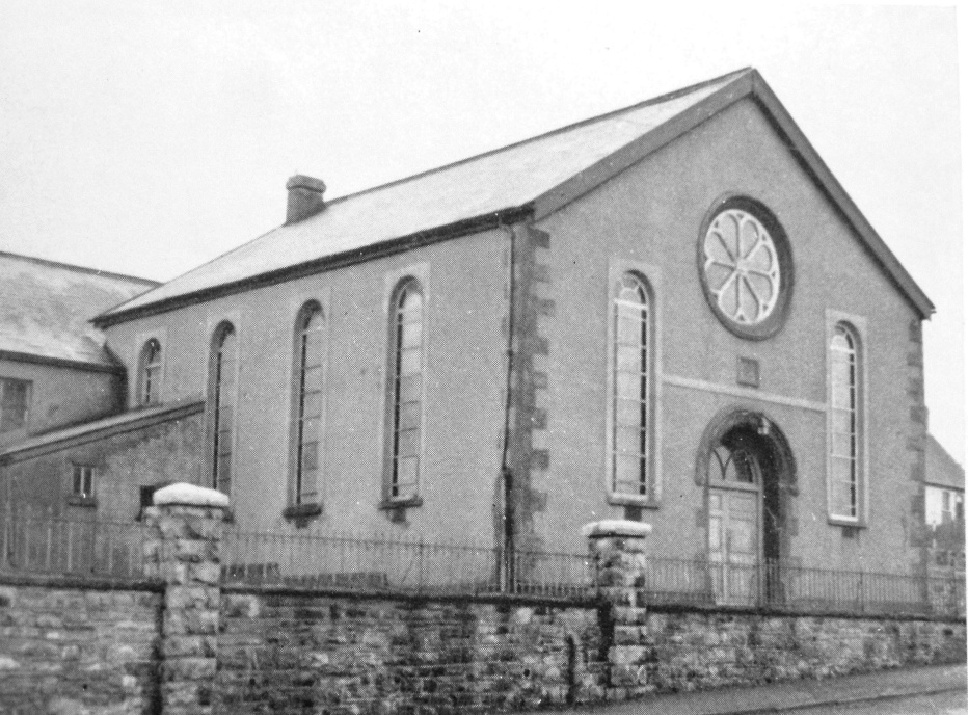
the opening. It is now demolished. (Author) Click Image
to Expand
George was born in Glooston, a tiny village in Leicestershire, the home of his father, William, and grandfather, John. He was the oldest of four siblings: George (born 1780), Susanna (1782), Thomas (1785) and William (1788).[1] At that time, Glooston was totally dependent upon agriculture but all three sons chose to turn their back on that traditional world to seek their fortune in the rapidly developing world of industry; in their case it was lace making.[2] Ultimately George and William found their home in Tewkesbury with only Thomas remaining in its East Midlands’ heartland. In 1840 we find him living in Nottingham and holding a patent for adding spotted edge patterns onto lace.[3] His wife Elizabeth gave birth to four daughters and two sons. The 1841 census shows two of the daughters, Mary (25) and Elizabeth (20), living in Tewkesbury with their bachelor uncles, George and William.44] Mary died in 1851 but Elizabeth appears to have been still living with her uncle George, when he died 1869.[5] He was generous towards his nephews and nieces, dividing his inheritance equally amongst them except for Jane, his only married niece, who received £10,000.[6] He also provided Thomas’s widow with an annuity of £150, Thomas having died in 1856.
George epitomised the self-made man, beloved by the Victorians. I first found him weaving silk stockings in Nottingham in 1807 and lodging with another weaver, John Brown.[7] At that date they were working hard on a machine to produce a lace to rival expensive hand-made lace from France in the knowledge that, if successful, they could expect to make a fortune. The key problem they had to solve was to allow the warp (the thread attached to the frame) to move sideways over – or traverse – the frame to create the honeycomb pattern of lace. Unfortunately they were beaten to it by another entrepreneur, John Heathcoat, who patented a machine in 1809.[8] However, they persevered, no doubt encouraged by the reward offered by a wealthy Nottingham banker, William Nunn, for a machine which did not infringe Heathcoat’s patent.[9] In 1811 they were successful and patented their ‘bobbin net’ machine.[10] William Nunn immediately financed fifty such machines on the condition that his sixteen-year-old son Henry became a partner.[11] So Brown, Freeman and Nunn opened a factory in Emscote in Warwick, hoping to escape the claustrophobia of the East Midlands’ industry and also to exploit the expertise of the town’s tape weavers. It failed some time before 1820, even though they were reported to be offering wages of £7-£10 a week for skilled workers (approximately twenty times the pay of a farm labourer).[12] They then moved to a site just south of Blackfriars Bridge in London. Within five years, they suffered a second setback – as this also failed. So they had to adopt a third plan; half of the seventy-four frames were sent to Newport, Isle of Wight, and the other half to Tewkesbury.[13] The partners already showed that they were not afraid to move around to seek their fortune.
As John Brown had now died, it was left to George to plan this next step. His younger brother William was given the responsibility of establishing the firm on the Isle of Wight in continuing partnership with Henry Nunn, whilst George himself seems to have planned the move to Tewkesbury.[14] Thus at the age of forty-five, he set up his greatest venture: the lace factory in Tewkesbury. This would turn him into the equivalent of a multi-millionaire. A hint of the fortune to be made could already be discerned, for despite these early setbacks, George was already making money. We don’t know any details but, not only could his firm finance the building of two new factories, in the five years after taking out his patent he and his partners paid out at least £5,000 to defend it through the courts. Good fortune, however, did shine on George at this stage as the new ventures took place during the ‘twist net fever’, which gripped the industry between 1823 and 1825. As the original patents on the machines expired, they could be freely copied, so output increased and profits rose.[15]
George the Tewkesbury Lace Manufacturer
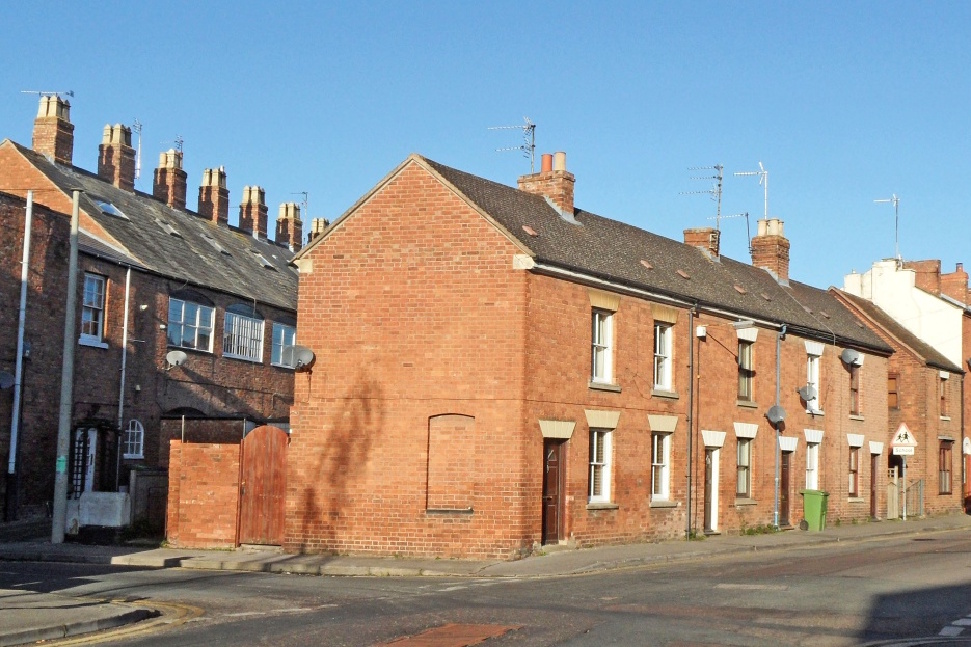
Street with the factory behind (Author) Click Image
to Expand
On 27 June 1825 George Freeman purchased over an acre of freehold land “in the upper length of Oldbury field. . . . bounded in part by certain roads at the back of Barton Street”. He bought it from William Handley and his wife Susanna who became the owners after the Oldbury field enclosure of 1808. The deed of conveyance gives George’s address as Christchurch, Surrey, and so he was apparently still living near the site of the Blackfriars factory.[16] The land itself cost £950, which he seems to have paid without having to borrow. How he then financed the factory and its seven accompanying houses in Chance Street still remains unknown, but it was in this place that George ‘made a plum’, i.e. £100,000.[17]
To put this into perspective, in 1841 his most skilled workmen were earning just over £100 per annum.[18] As George and John Brown had once hoped, mechanical lacemaking was proving to be very profitable. This was particularly so in 1833, after the ever-inventive George had taken out another patent for a machine, the output of which mimicked expensive French blonde lace, then at the height of fashion. On £60,000 worth of sale the profit could be £40,000 and it is said that George had the monopoly for twelve months.[19] In 1833 he also introduced steam power into the factory[20] and, although 1835-36 were years of slump, the factory continued until 1853 when its fifty machines were sold to Kirkland’s lace factory in Beeston, Nottingham, almost a decade before French competition brought the downfall of the English industry in the 1860s.[21]
But why did George decide upon Tewkesbury? I have not discovered his personal motives but some of the town’s attractions can be outlined. The traditional industry of domestic framework knitting was suffering from competition from the East Midlands and was in decline. The number of frames fell from 800 in 1810 to 559 in 1819, so knitters were looking for work.[22] On the positive side, the thread they spun was fine enough for use in the lace machines. As a result the factory gave at least a short-term boost to the trade; 600 frames were in use in 1835.[23] There were good road links and the raw cotton could come from Bristol along the River Severn which, with the River Avon, could also carry the finished goods to market. Also a large fashionable market was growing in nearby Cheltenham. There is a tantalising isolated reference in Pigot’s Bristol Directory of 1830 to William Freeman and Company, Lacemaker and Dealer, at 15 Wine Street, Bristol, near the floating harbour. Was this a short-lived venture by the Freeman brothers?
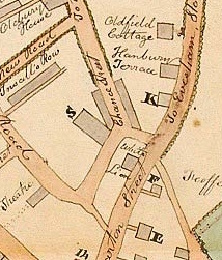
S is the factory
F the Independent Chapel.
In Tewkesbury the factory and seven houses must have been built quickly, for in 1826 the Nottingham Masters’ Committee found thirty-seven lace machines in the town.[24] It is generally assumed that the original factory stretched almost to Trinity Walk and the range parallel to the Walk was added about 1860 by Samuel Massey Crosse when setting up his ‘Patent Renewable Hosiery Company’.[25] However, the Croome Map of 1825 shows that the factory is the same size as the seven houses in Chance Street. If the map is accurate, no clues of its original size are discernible today.
George’s technical skills, entrepreneurial spirit and drive to be successful built a thriving business. He certainly made an impact on the town for James Bennett commented in 1830: “the buildings are very commodious and the machinery is of the most costly and perfect kind. We sincerely hope that the large capital which is embarked in the speculation may be productive of wealth to the projectors, and of advantage to the town”.[26] Careful scrutiny of the 1841 and 1851 census returns counted thirty-eight females and twenty-two males employed in the industry in 1841 and twenty females and eleven males in 1851, when trade was perhaps slackening before closure in 1853.[27] At both dates nearly all the females were aged between fifteen and thirty and almost all of the men were over thirty. The females tended the machines whilst the men maintained them as well as handling the yarn and the finished lace. Unsurprisingly, nearly all the employees lived in Chance Street. These jobs must have been prized, for the wages were significantly above those of framework knitters. Bennett recorded £1 a week in the early 1830s, compared with 7s. a week for hand knitters.[28]
What might seem surprising to us is that George’s entrepreneurial spirit leading to wealth creation does not seem to have rubbed off on the town’s traditional framework knitting industry. Only the Priors in Barton Street, originally hosiers, invested in machinery with four machines by 1827.[29] They were still in production in 1836, but had ceased by 1839.[30] Generally the stocking making industry continued its domestic production until its declining years, when Samuel Massey Crosse bought the disused lace factory building in 1860 for his ill-fated venture into machine-made stockings.[31] George must have breathed a sigh of relief when Crosse bought the building which had stood empty for seven years.
George the Public-spirited Citizen
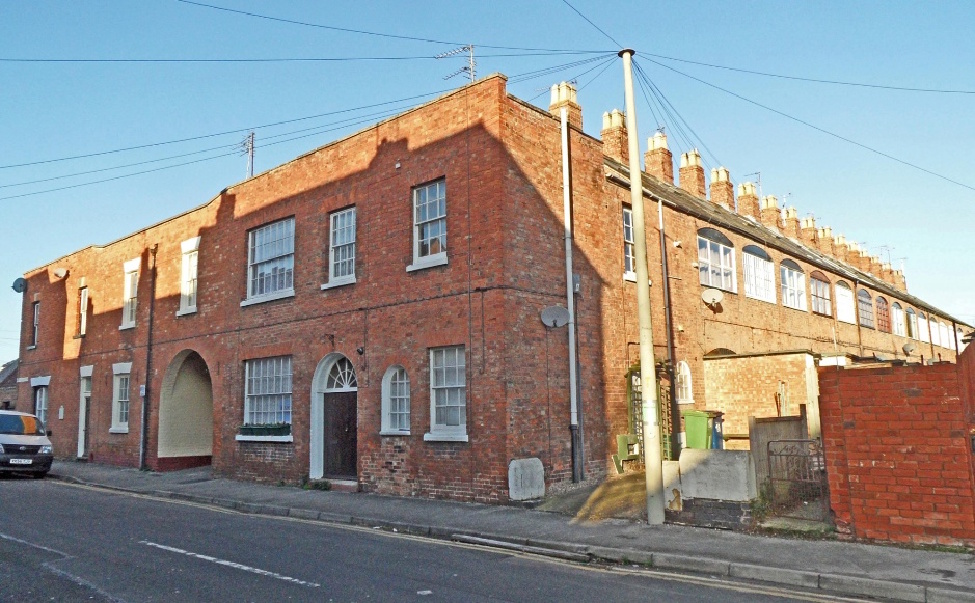
living in 1836, now Osborne HouseClick Image
to Expand
In 1836 George and William were living in the house attached to the factory facing onto East Street [now called Osborne House], but by the time of the 1841 census they had moved to a house worthy of their status as the richest capitalists in Tewkesbury towards the top of the High Street: ‘Avonside’, 63 High Street.[32] Later, when George moved to Cheltenham in 1846, his brother moved to Barton Street near the Independent Chapel. With money behind him and the prospect of great wealth before him, George entered the civic life of the town as a political reformer even before he gained the right to vote. He served as treasurer to Charles Hanbury Tracy’s successful 1832 election campaign, to which he contributed £200, twice as much as anyone else; brother William contributed £15. In the same year both brothers sat on the Board of Health trying to contain the cholera epidemic.
Three years later George seized his chance to become fully involved in civic life as a consequence of the 1835 Municipal Corporations Act which swept away the corrupt unreformed council. His popularity can be judged from the fact that in the poll he came fourth. All the twelve successful candidates were reformers and two- thirds of them were Dissenters like George and, although he was re-elected in 1838 and 1841, he never seemed interested in seeking higher office. A year after his election he showed his Free Church principles, chairing a meeting to oppose a compulsory parish rate to repair the Abbey. However, he showed his philanthropic nature by stressing that should the rate become voluntary, he would subscribe. The proposition was defeated.[33] In that same year, he was first appointed to the council’s ‘Watch Committee’ and became a trustee of the Borough Charities.[34]
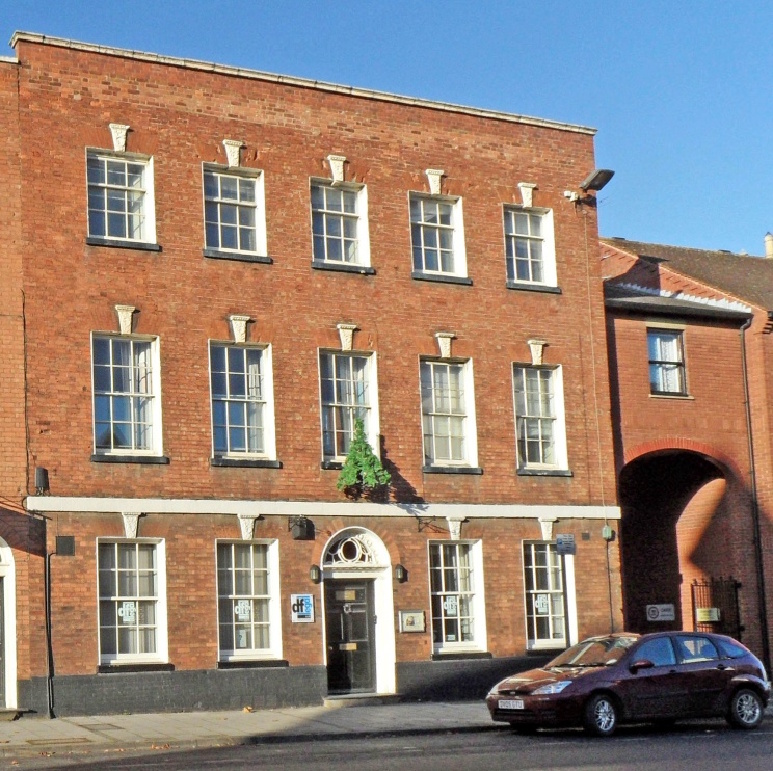
were living here in ‘Avonside’, 63 High Street.
Home Abbey House is built in its grounds Click Image
to Expand
From 9 November 1837, he sat on a small committee to draw new bye-laws to improve the quality of life in the town, combating such problems as mad dogs, dangerous driving, cherry knocking and indecent bathing! A two-year correspondence with the Home Secretary, Lord John Russell, followed resulting in a much reduced number of bye-laws, against dangerous dogs, dangerous driving and the sale of unfit food. On 3 November 1840, George recommended to the council that they purchase two new fire engines. In September 1845 we find him sitting on a committee to find land on which to build Colonel Ollney’s proposed almshouses. When nobody could be found to offer any land, George himself generously offered land in Oldbury worth £200, but the almshouses were never built.[35] Then, on 10 November of that year, seemingly out of the blue, the council received a letter from George announcing his resignation “in consequence of his removal to Cheltenham”.
At the age of sixty-five, George had decided to retire and enjoy his wealth. In so doing, he would transform himself from Lace Manufacturer to Gentleman. He left the factory in the hands of his brother, William, although he remained a partner in the firm until its end. On 10 June in the following year, William filled his place on the council. However, before we follow George to Cheltenham we ought to pause and reflect on his other contribution to Tewkesbury’s civic life – as an active member of the Independent Chapel in Barton Street.[36]
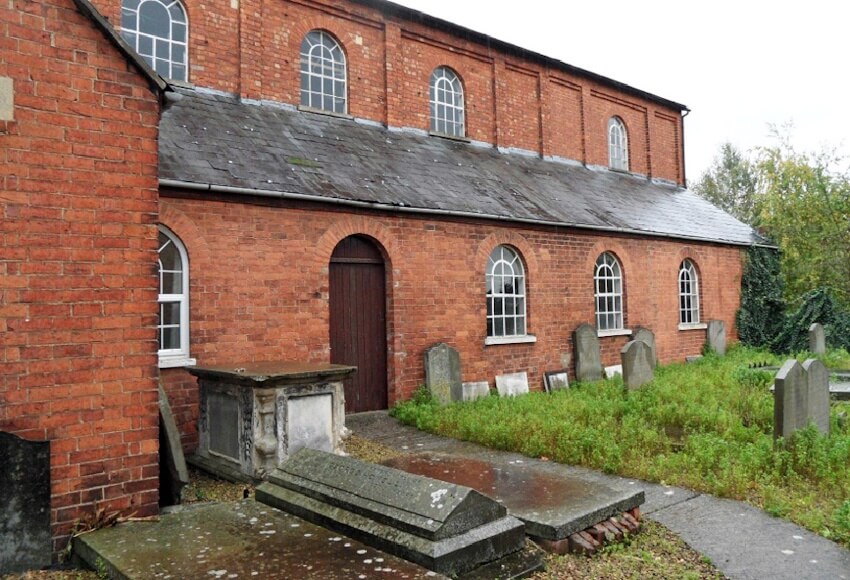
George the Dissenter
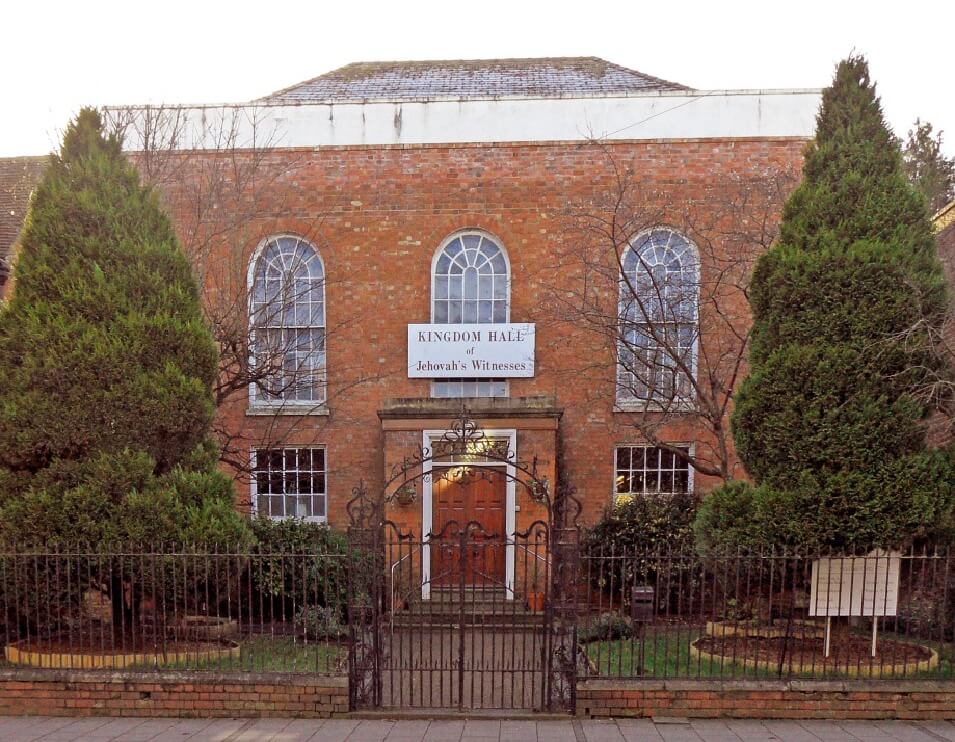
In 2014 it is owned by the Jehovah’s WitnessesClick Image
to Expand
We do not know where George developed his Nonconformist beliefs for there were no Dissenting chapels in Glooston when he was young. Perhaps his religious beliefs were developed at the same time as his political beliefs and went hand-in-hand with the new world of industry and commerce. This promised a better world by pushing aside outdated ideas of domestic industry, unreformed politics and the established church. Although the surviving records enable us to know far more about his involvement in civic life than his involvement with the Barton Street chapel, his contribution to civic life can be seen to be a reflection of his religious beliefs, especially in serving the needs of the town’s poor. This was evidenced in 1828 when the congregation had outgrown the existing building and it was the poor who were largely excluded. George and William both sat on the committee to increase its accommodation by building out towards Barton Street and creating a gallery inside.[37] In 1839, he gave half the cost of £340 for enlarging the schoolroom which still stands. He and William served as chapel trustees and even after moving to Cheltenham, George remained a trustee until at least 1864.[38]
That George showed concern for the poor can be seen again during the depression of the early 1840s when he donated £50 over three years (1840 to 1842) to provide coal and bread. This concern had already expressed itself in his contribution of £10 to the building of Holy Trinity’s Infant School near his factory in 1839. Significantly his name is not found in the earlier list of subscribers to the church itself but presumably, as the school was intended “for the children of the poor of all persuasions”, he felt he was not compromising his Free Church principles.[39] There can be no doubt that George was very much involved in the life of Tewkesbury. Few could have remained ignorant of his presence as an active member of the community in areas of government, religion and philanthropy, or as the first major entrepreneurial capitalist employer. Yet this all came to an end at the age of sixty-five, when he took his retirement and entered the next stage of his life, leaving his younger brother William to keep Freeman & Co. flourishing into the foreseeable future.
George the Fundholder
It is ironical that George lived longer in retirement in Cheltenham (1846-69) than he did making his money in Tewkesbury (c.1825-46) and that we know so little about his life in these later years. Presumably he felt he had made his contribution to society and was now intent on enjoying (and increasing) his wealth. He chose to live at 6 Bayshill Villas, one of the large houses recently built in a most fashionable part of the spa town not far from The Promenade and Montpellier. He moved there with his two nieces, Mary and Elizabeth. We see them in the 1851 Census: George (70), now calling himself a fund holder, Mary (35) and Elizabeth (30) and living with a servant and a groom. Sadly, Mary died six months later. In 1861 he had added railway proprietor to his status; Elizabeth had become a lady and only a cook was also living there on census night.[40]On their arrival in Cheltenham all three transferred their membership to Highbury Chapel and the chapel seems to have been the focus of George’s life for the rest of his days. Highbury’s historian records him as having contributed generously to the new chapel of 1852.[41] In addition, throughout his time in Cheltenham he continued to contribute to funds to relieve the poor; for example, in 1860 he contributed £5 to a fund which raised £40 to employ unemployed men to repair footpaths in the town.[42] Referring to his generosity in South Wales, his minister, Andrew Morton Brown, explained George’s behaviour to the congregation: “… because he likes to do exceptional things like this”.
For the rest of his life his greatest philanthropy was reserved for the Welsh Independents as he fell under the spell of the Reverend Thomas Rees. George contributed £2,500 into the pension fund for retired ministers in addition to paying for all Thomas Rees’s travelling expenses as he toured England and Wales searching for further funds.[43] However, all these donations were as loose change to George. The addition of railway proprietor to his status in 1861 indicates he was still intent on increasing his wealth in retirement. This is further supported by an amazing speculative venture about the time he retired when he bought land in New Zealand, no doubt influenced by the propaganda promising big returns resulting from British colonisation. This included 400 acres in the Wairau valley in the northern part of South Island. His intention was to divide the land into sections to establish a settlement to be called Tewkesbury, clear evidence of the affection he held for his adopted town. Thus, even in retirement, his entrepreneurial spirit was alive, but this venture never took off. In 1865 he sold two ten-acre allotments for £40 and the remaining land was sold off by his executors after his death.[44]
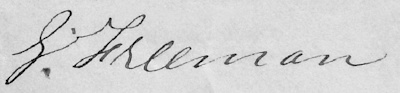
George’s long and successful life ended in his eighty-ninth year on 14 April 1869 “of natural decay”.[45] Regrettably for the historian, no obituary seems to have been published; he was just one more elderly affluent person who had retired to the Spa town. However, John Rogers wrote a curious epitaph ostensibly for him:
He became very childish and like many rich men he feared he would come to poverty and die in the Union (workhouse). He did not and at the last he left his wealth to others. The rich and poor meet together, the Lord is the maker of us all. He was a benefactor to the town and helped every good cause and promoted everything for the prosperity of the town and its people.[46]
Rogers has, in fact, written an obituary for his brother William!
His final return to Tewkesbury was to be buried beside his brother, who had died in 1859, in a simple grave in the Independent Chapel graveyard. There is no clue here that his estate was valued between £100,000 and £250,000.[47]After the bequests outlined above, and £150 to the Rev. Henry Welsford of the Independent Chapel, the rest was divided amongst his two nephews and two nieces; William Henry, the elder nephew, inherited 6 Bayshill Villas and later rose to become a prominent Cheltenham citizen.
George Freeman was a man of his time. Britain’s rise to be the ‘Workshop of the World’ was creating opportunities for people of relatively humble birth to make their fortune. It seems natural that his entrepreneurial spirit found its home in political reform and religious dissent as the old order was challenged. These three attributes can be clearly discerned during the years he lived in Tewkesbury, although his philanthropy, generous by the standards of the day, came nowhere near his financial acquisitiveness. George was Tewkesbury’s first major industrial capitalist. When he retired to Cheltenham to enjoy his wealth, he had become his own reward.
References
- Family dates are all taken from URL: http://freepages.genealogy.rootsweb.ancestry.com ; accessed 21 Oct 2013
- For Glooston, see ‘Glooston’, A History of the County of Leicestershire: Volume 5: Gartree Hundred (1964), pp. 112-115. URL: https://www.british-history.ac.uk/vch/leics/vol5/pp112-115 , accessed 21 Oct 2013.
- Nottingham Annual Register 1840, p. 132.
- The National Archives (TNA): HO107/380 Book 4, p. 30.
- Cheltenham Chronicle,11 Sep 1851, p. 3.
- England and Wales National Probate Calendar [Index of Wills and Administrations 1861-1941], p. 336.
- William Felkin, A History of the Machine Wrought Hosiery and Lace Manufactures (London 1867), p. 209.
- Felkin, p. 197.
- Gloucestershire Archives [GA]: IN36: J. A. Adcock, The Tewkesbury Stocking Industry 1760-1900 (1973).
- Felkin, p. 215.
- Felkin, p. 217.
- ‘The borough of Warwick: Economic and social history, 1545-1835’, A History of the County of Warwick: Volume 8: The City of Coventry and Borough of Warwick (1969), pp. 504-514. URL: https://www.british-history.ac.uk/vch/warks/vol8/pp504-514 , accessed 21 Oct 2013.
- Felkin,p. 225.
- Memories of Henry Sheppard (who moved from Tewkesbury to Newport to manage the Isle of Wight factory, probably when the factory closed in 1853) found at URL: http://www.woottonbridgeiow.org.uk/lace [dead], accessed 15 Oct 2013.
- Felkin,p. 225: £5,000 was worth £337,000 in 2011 [Editor: see inner cover]. p. 331: ‘Twist net fever’ was the significant increase in profits caused by a huge increase in machine-made lace, i.e. ‘twist net’.
- The deed of conveyance is in the hands of Peter Finnigan, Osborne Gardens, East Street. I owe the reference to John Dixon and thank Peter for allowing me to quote from it.
- Felkin, p. 226.
- House of Commons, Report of the Select Committee to enquire into the Laws affecting the Exportation of Machinery (London 1841), p. 246.
- Memories of Henry Sheppard.
- James Bennett, Tewkesbury Yearly Register and Magazine, Volume I, p. 201.
- Memories of Henry Sheppard.
- For the decline of the industry, see Anthea Jones, Tewkesbury (Sussex 1987), pp. 140-42.
- T. Rath, ‘The Tewkesbury Hosiery Industry’, Textile History, Volume 7 (1976), p. 149.
- Felkin,p. 333.
- Victoria County History of the County of Gloucester,Volume 8 (London 1968), p. 145.
- James Bennett, The History of Tewkesbury (Tewkesbury 1830), pp. 202-3.
- TNA: HO107/380/Book7 and HO107/1974/fol. 393 respectively.
- Bennett, History, pp. 200-1.
- Rath, p. 148.
- Pigot’s Directory of Gloucestershire 1836 and 1839.
- GA: D2079/III/73.
- GA: P329/1 OV1/10 and see fn. 5 above. This house was subsequently owned by C.W. Moore, the solicitor, and then A.E. Healing, the miller. Today it is a solicitor’s practice with its copious garden hosting Home Abbey Retirement Home. [Editor]
- TNA: HO107/1974/fol. 393/p. 31, p. 80, p. 104, p. 256, p. 273.
- GA: TBR A1/9 14 November 1836 (This is the council minute book. Unfortunately it does not have page numbers and so all references to it here are identified by their dates) and James Bennett, History, p. 281. The ‘Watch Committee’ was responsible for Law and Order.[Editor]
- James Bennett, Tewkesbury Yearly Register and Magazine, Volume II, p. 263.
- This 1592 branch of the Puritan reformation uses both the names ‘Independent’ and ‘Congregationalist’. [Editor]
- GA: D6026/12/28.
- GA: D6026/12/28 and James Bennett, Volume II, pp. 19, 49, 86.
- Bennett, II, pp. 430-32.
- TNA: HO107/1973/fol. 99/p. 38; &: RG9/1800/fol. 133/p. 22.; GA: D12407 Highbury Chapel minutes 1827-1990s. At the present time Highbury’s records are being catalogued. When the task is completed it is possible further references to the Freemans will be discovered.
- Walter Ansell, One Hundred Years of Congregationalism in Cheltenham: Highbury 1837-1927 (Cheltenham 1927), p. 29.
- Cheltenham Chronicle, 10 Jan 1860, p. 4.
- John Thomas, Cofiant Y Parch. T. Rees, D.D., Abertawy [A Biography of the Rev. T. Rees, D.D. Swansea] (Dolgellau 1888), p. 195, my translation, and p. 196.
- Ralph T. Denton, ‘Tewkesbury’, Journal of the Nelson and Marlborough Historical Societies,Volume 1 Issue 2, November 1982. URL http://nzetc.victoria.ac.nz/tm/scholarly/tei-NHSJ04_02-t1-body1-d3.html , accessed 21 Oct 2013. I owe this reference to Warren Sheppard of New Zealand, a descendant of Henry Sheppard. The area can be located on Google maps by typing in ‘Erina’.
- Cheltenham Mercury, 17 Apr 1869.
- John Rogers, A Short History of Tewkesbury’s Alleys, written in 1905 and reprinted by Collections. [Editor]
- Today approximately between £7.7m & £19m [Editor: see inner cover].
Comments